Why Odisha Is Important in India’s Rice Export Supply Chain
Odisha is one of India's primary parboiled rice producing states — and more importantly, it is one of the few states where parboiled rice is not just an export commodity but a daily staple. That ground-level consumption culture shapes everything about how rice is grown, milled, and moved in this belt. For buyers sourcing non-basmati parboiled rice from India, understanding Odisha's role in the supply chain is not a geography lesson. It is a sourcing decision.
This article is based on direct fieldwork across the North Odisha and West Bengal border belt — visiting mills in Balasore and Dantoon, speaking with retired and active FCI officers, and understanding the commercial realities of rice procurement in this region from the ground up.
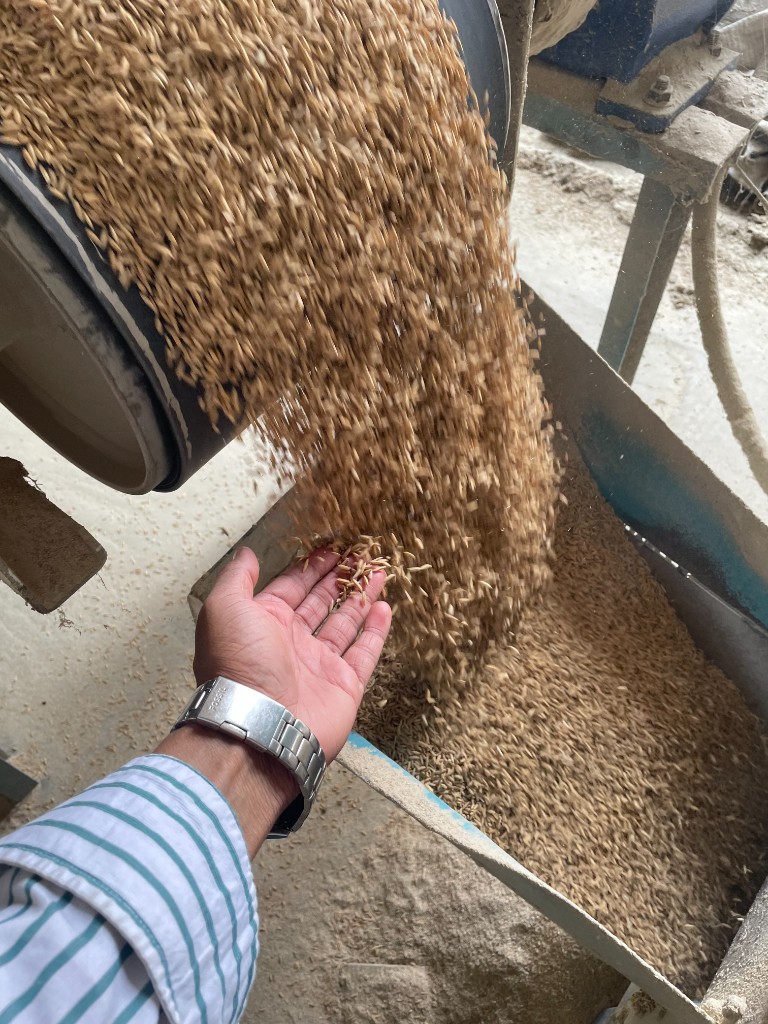
Odisha's Position as a Parboiled Rice State
Most Indian states produce rice. Fewer produce parboiled rice at scale. Odisha is one of them — and the reason is cultural before it is commercial. Parboiled rice is the everyday rice of Odisha. It is what households cook, what institutions procure, and what the state's milling infrastructure is built around. This means the processing ecosystem for parboiled rice in Odisha is deep, established, and naturally oriented toward export-grade output.
For IR-64 and Swarna parboiled rice buyers, this matters because you are not asking Odisha mills to adapt their process for export. You are sourcing from a belt that has been parboiling rice for generations. The milling knowledge, the steaming and drying discipline, the quality consistency — it comes from practice, not from recent commercial retrofitting.
What the North Odisha and West Bengal Border Belt Produces
The sourcing belt relevant for export runs through North Odisha and extends into the West Bengal border districts. Mills in this corridor produce several commercially relevant varieties.
Swarna Parboiled Rice
Swarna parboiled rice is present across both Odisha and West Bengal. It is one of the most widely consumed non-basmati varieties in eastern India and has strong export demand in African and Asian markets. The grain profile suits bulk buyers looking for a practical, consistent, widely recognised variety.
IR-64 Parboiled Rice
IR-64 parboiled rice is the primary export-oriented variety from this belt. It is a long-grain, parboiled variety that fits the quality and price expectations of bulk importers across East Africa, the Middle East, and parts of Southeast Asia.
Super Miniket and Banskathi
In the Dantoon area near the West Bengal border, two additional varieties are present — Super Miniket and Banskathi. Both are parboiled and locally significant. For export purposes these are currently niche, but they represent the agricultural diversity of this corridor and may have demand in specific regional markets.
For buyers evaluating variety options, this belt gives access to Swarna and IR-64 as primary commercial grades, with Miniket and Banskathi as secondary regional varieties available depending on the season.
The Ground Reality of Mill Supply in Odisha
One thing that does not appear in any export directory or trade report is the actual commercial structure of Odisha's milling sector. After speaking with retired FCI officers and active mill operators, the picture is this.
A significant portion of Odisha's rice mills operate under government paddy procurement schemes. The mill sources paddy from government procurement, processes it, and returns the rice to the government. The conversion ratio runs approximately 68% — 100kg of paddy yields around 68kg of rice, with the remainder going back as bran, husk, and other by-products that the miller sells to their own buyers.
This means that commercial surplus available for private export buyers is more limited than the state's overall rice production figures suggest. When you approach mills in Odisha as a new exporter, many will decline — not because of lack of capacity but because their paddy and output is already committed to government supply chains.
The exporters and merchants who succeed here are the ones who identify mills that operate with privately procured paddy bought at market prices, build direct relationships with those mill owners, and establish consistent order volumes that make the partnership commercially worthwhile for both sides.
This is not a barrier. It is a filter. It means that the mills who do work with export buyers are genuinely commercial operations — and those relationships, once established, are durable.
Quality Control Is Non-Negotiable in This Belt
Rice is more perishable than most buyers assume. A 1% increase in moisture content between mill gate and destination port can be the difference between a successful shipment and a container that arrives rejected. This is not theoretical. FCI quality control officers who have worked this belt for decades will tell you the same thing.
Third-party pre-shipment inspection is not an optional cost in this supply chain. It is the minimum discipline required to protect both the exporter's margin and the buyer's confidence. Moisture verification, broken percentage checks, and bag weight confirmation at the mill before stuffing — and again at the port before sealing — are the two checkpoints that matter most.
The improvement in quality standards over the past decade is real. Sortex machines, moisture meters, and third-party labs have meaningfully raised the baseline. But the discipline to use them on every shipment still has to come from the exporter. Nobody enforces it for you.
Port Access — Why Visakhapatnam Is the Preferred Gateway
For North Odisha sourcing, the primary export port is Visakhapatnam (Vizag) in Andhra Pradesh. Some millers and exporters in the West Bengal border area use Haldia port, but local charges and operational costs at Haldia run significantly higher than at Vizag. For most commercial export calculations, Vizag gives better cost efficiency, better vessel connectivity for Africa and Asia routes, and a more established CHA and freight forwarding ecosystem for rice exports.
The inland logistics from Balasore to Vizag are manageable and well-established. Transport rates per MT are calculable in advance, and millers in this belt have experience coordinating dispatch to Vizag for export cargo. This makes supply chain planning more predictable for exporters building their first or second shipment cycles.
Why This Belt Matters for African and Asian Buyers
East African markets — Kenya, Uganda, Tanzania, Mozambique, Zimbabwe — are significant destinations for Indian non-basmati parboiled rice. These buyers look for consistent quality, predictable shipment windows, and competitive CIF pricing. The Odisha and West Bengal border belt, routed through Vizag, fits this demand profile well.
Swarna parboiled rice from this belt is commercially suited to buyers serving price-sensitive mass markets. IR-64 parboiled serves a slightly different segment — buyers who want a more premium non-basmati grade at a workable price point. Together, these two varieties from one sourcing corridor give exporters and importers meaningful flexibility in how they serve their downstream markets.
For Asian buyers — particularly in Sri Lanka and the Maldives — varieties like GR-11 parboiled are relevant, and while this variety is primarily Tamil Nadu-sourced, the broader parboiled expertise and export infrastructure shared across southern and eastern India applies similarly.
What Reliable Sourcing From This Belt Actually Requires
Getting rice from Odisha to a buyer's port is not complicated. But doing it reliably, shipment after shipment, requires a specific set of disciplines that first-time exporters often underestimate.
- You need mill relationships built on trust and consistent volumes, not one-off transactions.
- You need written price confirmation from the mill before you confirm pricing to your buyer.
- You need third-party QC at both the mill and the port.
- You need a freight forwarder who understands rice export documentation — phytosanitary certificates, RCAC inspection, certificate of origin, fumigation, and marine insurance — and can coordinate these without delays.
The millers who have worked with export buyers in this belt are generally organised and cooperative. Many provide transportation to the port. Many have experience with the documentation cycle. The supply chain, once set up correctly, runs well.
The most common failure point is not supply or logistics. It is skipping quality discipline to save a small amount of money on inspection — and paying for it when the container reaches the buyer.
Work With a Reliable Rice Export Partner
At Kalinga Foods, we source IR-64 and Swarna parboiled rice directly from mills in the North Odisha and West Bengal border belt. Our sourcing process includes direct mill relationships, third-party pre-shipment inspection, and full export documentation from phytosanitary to certificate of origin.
For buyers looking to discuss specifications, pricing, or shipment planning for non-basmati parboiled rice from India, use the contact form below.
Frequently Asked Questions
Why is Odisha important for parboiled rice exports from India?
Odisha is one of India's primary parboiled rice producing and consuming states. Its milling infrastructure, variety availability, and port access through Visakhapatnam make it a commercially practical sourcing base for IR-64 and Swarna parboiled rice exports.
Which rice varieties are available from the North Odisha and West Bengal border belt?
The primary export-relevant varieties are IR-64 parboiled and Swarna parboiled. Super Miniket and Banskathi are also present in this corridor as regional varieties. Swarna is common across both Odisha and West Bengal.
Which port is used for rice exports from North Odisha?
Visakhapatnam (Vizag) is the primary export port for North Odisha sourcing. While some exporters use Haldia port for West Bengal shipments, Vizag offers better cost efficiency and vessel connectivity for African and Asian routes.
Why is third-party QC important for rice exports from Odisha?
Rice moisture content is critical for export quality. A 1% moisture increase can result in cargo rejection at destination. Pre-shipment inspection at the mill and at the port before container sealing protects both the exporter's margin and the buyer's interests.
What is the commercial supply structure of Odisha rice mills?
A significant portion of Odisha mills operate under government paddy procurement schemes, which limits commercial surplus available for private export buyers. Exporters who succeed in this market build direct relationships with mills that operate on privately procured paddy at market prices.
Discuss rice export requirements
For IR-64 rice, Swarna rice, parboiled rice, or Odisha sourcing for your market, share your specifications and shipment plan with our team.
Send Rice Inquiry